The Viking helmet is usually depicted with horns, but the Norse warriors really never wore them.
When you think of a Viking , what do you see ? plausibly one of the first thing that get to intellect is a fearsome helmet with two horns . But the floor of the Viking helmet is much more complex than that .
Many historians are convinced that Vikings did n’t actually wear the iconic horned helmets . In fact , so few Viking - epoch helmets have been discovered that it ’s possible the dreadful Norse warrior did n’t wear helmets at all .
So what did these warrior wear down into fight ? And how did the myth of the Viking helmet with horns get started in the first place ?

Public DomainA twelfth-century depiction of Nordic warriors invading England. Notably, they do not have horned helmets.
What We Know About The Viking Helmet
Public DomainA twelfth - century depicting of Nordic warrior intrude on England . Notably , they do not have horned helmet .
The Viking era hold up from about 800 until around 1050 C.E. Then , disparate group of Nordic warriors started attacking metropolis and town in Europe . Stories quickly spread of their force , their lack of “ civilization , ” and their flagrant neglect for Christianity .
Accounts of the first recorded Viking plan of attack in 793 , for object lesson , describe howa monastery in Lindisfarne was “ spattered with the blood of the non-Christian priest of God [ and ] despoiled of all its ornaments , ” and how the Vikings “ tread on the bodies of ideal in the tabernacle of God , like dung in the street . ”

Wolfmann/Wikimedia CommonsThe Gjermundbu viking helmet is the best-preserved Viking helmet ever found.
understandably , the invaders were something to be reverence — but did they wear horned Viking helmets ?
Sometimes . In coetaneous depictions , Viking often are picture as wearing simple round headdress . But other times they ’re shew as bareheaded — and not assume a helmet at all .
In fact , scarcely any Viking helmets — horned or otherwise — have ever been found . Though constituent of them have been bring out in places like Denmark , archaeologists have foundjust one preservedsuch helmet .
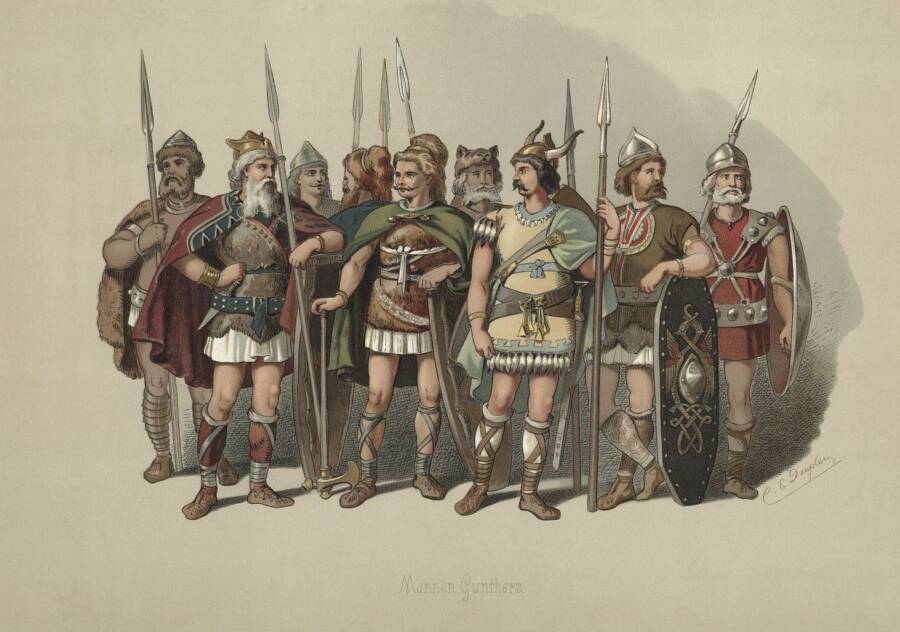
Carl Emil Doepler/PinterestCarl Emil Doepler gave the Vikings horned helmets, triggering a myth that lasts to this day.
Wolfmann / Wikimedia CommonsThe Gjermundbu viking helmet is the well - preserved Viking helmet ever find .
This helmet was divulge in 1943 , in Gjermundbu , Norway , in a warrior ’s grave accent alongside a full solidifying of chain mail . But why has only one been found ?
It ’s possible that Vikings just did n’t use helmets that often . Or , it could be that Viking warriors were n’t buried with their helmets . In any typeface , there ’s no corking surplus of Viking helmet in Europe . And archaeologist have never found a horn helmet from the Viking age .

National Museum of DenmarkOne of the pre-Viking horned helmets found in Denmark.
So , how did Vikings get the report that they wear down horned helmets into battle ?
How Did The Horned Viking Helmet Myth Start?
The myth that Vikings had horned helmet derive from a surprising place — the opera . In 1876 , costume designer Carl Emil Doepler sketched out design for a operation of Richard Wagner’sDer Ring des Nibelungen . Doepler gave Viking ’ helmets horn and the rest is account . But why ?
Carl Emil Doepler / PinterestCarl Emil Doepler give the Vikings horned helmet , spark a myth that hold out to this Clarence Day .
Doepler was n’t simply chance on with the inhalation of tusk Viking helmet . He really tapped intoan on-going German fascination with the Vikings . Thus , he decided to incorporate ancient German traditions , like detailed headdresses , into his Viking depictions .
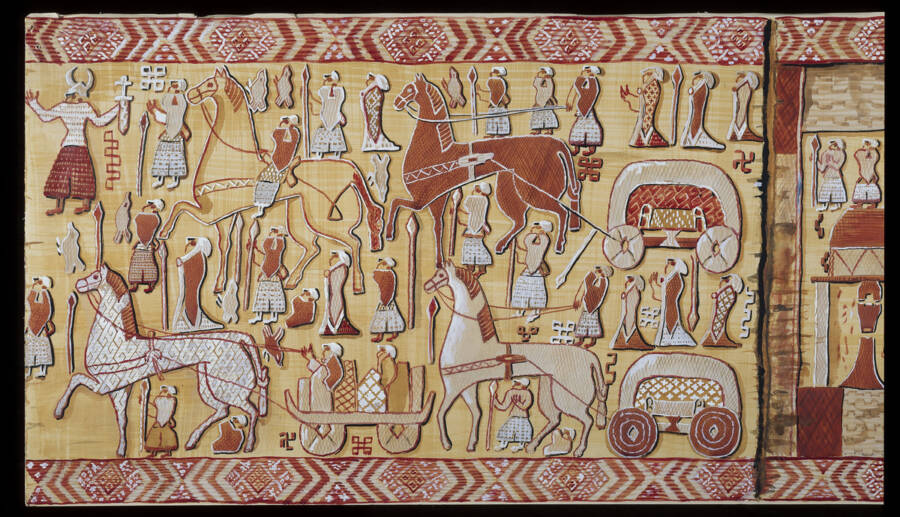
Museum of Cultural History, OsloThe horned figures in the Oseberg tapestry (this is a watercolor reproduction) may be Norse gods like Odin.
“ The horned Viking helmet was just one of innumerable colorful items in the inventory of a fin - Delaware - siecle Europe fascinated by state of war and its puppet , ” explain Roberta Frank in her paperThe design of the Viking tusk Helmet .
Indeed , although Vikings did n’t use horned helmets , they had existed in ancient Europe . In the 1860s , a Celtic horned helmet dating from between 150 and 50 B.C.E. was found in London . And in 1942 , workers in Denmark came across two impressive tusk helmet thatdate back to 900 B.C.E.
Both these finds predated the Vikings by hundreds and hundreds of years .
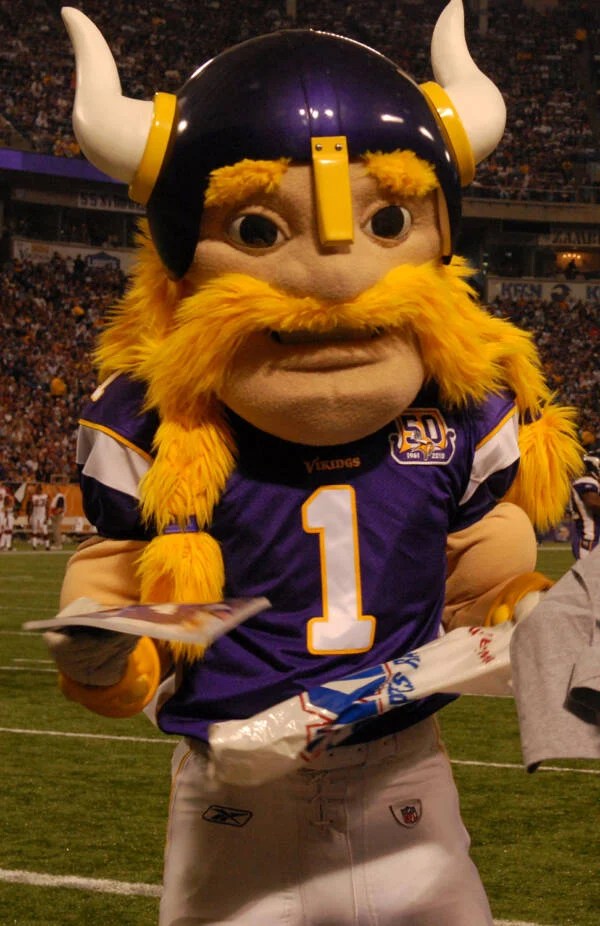
Wikimedia CommonsThe Minnesota Vikings mascot wears horn on its helmets.
National Museum of DenmarkOne of the pre - Viking horned helmets found in Denmark .
That said , horned helmet imagery does sometimes appear in Viking lore . In 1904 , archaeologists discovered a Viking - era ship in Oseberg , Norway . The ship dated to 834 B.C.E. — prime Viking age — and stop a numeral of artifact , including a tapestry .
Curiously , that tapestry seemed to draw masses put on horns on their head . But archeologist and historian are quick to point out that that does n’t necessarily imply that the Vikings wear such gear into battle .
“ Does this try that all Vikings wore the noted helmets with horns ? The answer is in all probability not , ” observe the National Museum of Denmark .
It ’s more potential that the tapestries depictedsome kind of religious ceremonyand that the horned helmet signify a Norse god like Odin .
Museum of Cultural History , OsloThe horn shape in the Oseberg tapestry ( this is a water-color breeding ) may be Norse gods like Odin .
Other depictions of horned headgear in Nordic history predate the Vikings . portrayal of theBerserkers , for exemplar — fearsome warrior know for taking drugs and fight back naked — date back to 400 B.C.E. The famous “ Golden Horn ” artefact seems to depict warrior like these .
Ultimately , it seems improbable that Vikings from 800 to 1050 C.E. actually wear horns on their heads during battle . But they might have embellish themselves with horns for other purposes .
It ’s “ potential that such headgear was worn for display or for cultic determination , ” the National Museum of Denmark observe .
But “ in a battle situation , horns on a helmet would get in the way . Such helmet would also have caused problems on board the warships , where space was already at a insurance premium . ”
In other Holy Writ , these horns might be frightening to lay eyes on . But they would n’t be much help in combat .
Yet despite all the grounds to the opposite , the myth about the Norse warriors ’ helmets has remove on a living of its own . Today , it ’s severe to imagine these warrior without their iconic armour .
The Viking Helmet In Modern Times
Wikimedia CommonsThe Minnesota Vikings mascot wears horn on its helmets .
The idea of Vikings wearing elaborate headgear has endured since Doepler first paint a picture it . Popular comics likeAsterix and ObeliskandHägar the Horribledepicted Vikings this way . Even the American football team the Minnesota Vikings proudly display horns on their mascot .
Yet word picture like these are inaccurate — or at least an simplism . There ’s no evidence that Vikings actually wear horns on their heads into battle .
And if Vikings did bust horned helmets , then it seems most potential that they did so for religious reasons . That ’s what the Oseberg tapestry seems to suggest — that Odin , a deity , would have horns .
at last , plenty of mystery remain about the Vikings . In some ways , they ’re just as bewildering and captivating to the great unwashed today as they were to the panic-stricken Europeans they round hundreds of years ago .
But one affair seems for certain . Vikings may have plunder , theymay have discover North America , they may have evengiven women solid rights — but they in all likelihood did n’t wear horns on their heads .
After interpret about the fact and fiction of Viking helmets , discover the taradiddle ofViking shieldmaidens , the allege female Viking warriors . Or , see howErik the Reddiscovered Greenland after being charged for murder .
